Vanus Play Framework
An experimental web server and application framework centered on durable web standards—HTTP, HTML, CSS, forms, and links—with a deliberately small frontend footprint.
Software engineer · Atlanta, Georgia
Berlin Brown is a software engineer with more than 15 years of experience developing distributed and enterprise systems. His technical writing covers artificial intelligence, large language models, JVM technologies, cellular automata, computer graphics, and lessons from open-source experimentation.
Background
Berlin’s interest in programming began at age ten in Austin, Texas, with a TRS-80 and BASIC. That early curiosity led to a degree in electrical engineering and computer science and a career building large-scale systems across financial services, insurance, public-sector engineering, and public-health data collection.
His work focuses on backend and distributed systems, alongside continued research into how AI, machine learning, simulation, graphics, and emerging models of intelligence can inform practical software.
Open-source work
These projects are working laboratories: places to take systems apart, rebuild them, and share what the process reveals about software design, intelligence, emergence, and computation.
An experimental web server and application framework centered on durable web standards—HTTP, HTML, CSS, forms, and links—with a deliberately small frontend footprint.
An open-source discussion and link-sharing platform built with a traditional server-side architecture using Java, Spring MVC, JSP, JRuby, Hibernate, and MySQL.
A lightweight Clojure and Java toolkit for generating PDF, image, and SVG reports from structured documents and templates.
A Java framework for experimenting with cellular automata, simulations, visual systems, and game-development concepts.
A long-running 3D graphics project exploring modern C++, OpenGL rendering, camera systems, particles, game entities, and real-time networking.
Code and demonstrations that make elementary cellular automata—including Rule 30—easier to study, modify, and apply.
Research notes
Cellular automata show how simple local rules can produce complex behavior. Stephen Wolfram’s work, including A New Kind of Science, helped bring these systems to a wider audience and demonstrated their relevance across biology, physics, computation, and other fields.
In an elementary cellular automaton such as Rule 30, each cell’s next state is determined by its current neighborhood. There are eight possible three-cell inputs, each mapped to a binary output. Repeating that small rule across a grid can generate intricate, seemingly unpredictable patterns.
Researchers have applied cellular automata to cryptography, data compression, artificial intelligence, geographic modeling, urban planning, music generation, terrain generation, and financial-market simulations. Their value lies in a powerful idea: apparent complexity can emerge from a compact, reproducible set of rules.
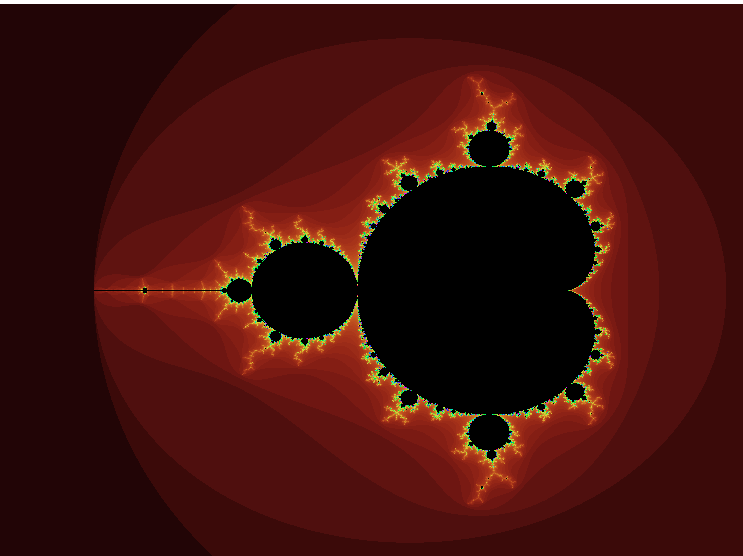
Current research interests connect emergent computation with AI, local large language models, Numenta’s Hierarchical Temporal Memory, and the Thousand Brains theory of intelligence.
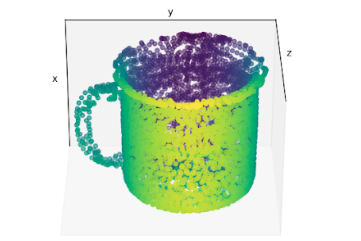
Experiments inspired by Numenta’s Monty project investigate how intelligent systems can learn through movement, sensory input, and object-centered representations.
Explore further