Berlin From Austin - Home
Berlin from Austin is a professional software engineer with more than fifteen years of professional application development experience and a proven track record of producing quality distributed software. My non-professional programming career began in Austin, Texas when I was 10 years old with the TRS-80 and early BASIC.
We are passionate software engineers, technology enthusiasts, and dedicated bloggers based in the vibrant city of Atlanta. With a deep love for innovation and a keen eye on the future, our interests span various domains, including software engineering, business, artificial intelligence (specifically ChatGPT and other LLM AI technology), and the fascinating world of Bitcoin. Allow me to take you on a journey through my professional background, interests, and the vision that drives my work. Java, Scala, LLM, Machine Learning.
Berlin from Austin's career began with a fascination for coding and problem-solving, leading to a degree in Electrical Engineering and Computer Science. Over the years, he has had the privilege of working on numerous projects, mostly large-scale enterprise solutions.
Updated Publish Date:
Create Date:

Blog and Social Media Links
Main Blog
Twitter Profile
Berlin from Austin - Bluesky
Blog - Berlin Misc
Vanus Framework Web Server
| [ More AI Speak ]
| [ Simple Rules Social ]
LinkedIn - Berlin Brown
Contact: myberlinaustin _ at _ proton.me
AI/ML Updates
This website and project will now focus on AI, LLM, and ML machine learning. The computing world has changed in 2024.
About
Berlin from Austin is a professional software engineer with more than fifteen years of professional application development experience and a proven track record of producing quality distributed software. My non-professional programming career started in Austin, Texas when I was 10 years old with the TRS-80 with early BASIC (Tandy RadioShack), and I haven't stopped programming since. My current focus technology stack includes Java enterprise web, mobile application development for Android and iOS. I am currently working with a financial services company (formerly a Citigroup unit), also with the City of Atlanta on a billion-dollar engineering project and the Center for Disease Control (CDC) for a public health data collection module.
Specialties: Backend Java development, Frontend Hybrid development IBM MobileFirst/Worklight, J2EE, performance analysis, web application security, IBM WebSphere, IBM DB2 with a focus on Financial Services and Insurance. With a new focus on #Atlanta, #AI, #LLM, #Blockchain.
Core Blog Links
Popular AI and LLM
More Posts, Items of Interest
You will see content similar to the following posts.
On Cellular Automata
A New Kind of Science
This is anoither topic I am interested in from Wolfram. The name Stephan Wolfram has been mentioned several times in this post. He is the founder of Wolfram|Research, his company is known for the popular Mathematica software suite and Wolfram|Alpha knowledge engine. He did not initially discover cellular automata, but he has recently been a prominent figure in its advocacy. He spent 10 years working on his book, A New Kind of Science. In the 1300-page tome, he discusses how cellular automata can be applied to every field of science, from biology to physics. NKA is a detailed study of cellular automata programs.
Basic Cellular Automata
Figure: Wolfram's Elementary CA Rule 30. Look at 3-bit input and 1-bit output.
Here is more on cellular automata, see the link below for further reading. The diagram above depicts the rule 30 program (or rule 30 elementary cellular automaton). There are 8 input states (2 ^ 3) and an output state of one or zero. If you look at the diagram from left to right, the first sequence of blocks on the left depicts an input state of { 1 1 1 } with an output of 0. Given input of cells { 1 1 1 }, the output will be set to 0. Subsequently, the next set of blocks consist of an input state of { 1 1 0 } with an output of 0.
Applied Cellular Automata
Cellular automata is often used with data compression, cryptography, artificial intelligence, urban planning, financial market modeling, music generation, and 3D terrain generation. If you are a software engineer, you may have to step back and consider how cellular automata patterns emerge and understand the nature of the dynamic system before looking for a typical software library. CA is not normally seen in everyday applications. Consider this when you look at some random pattern: don't think of the phenomenon as a random sequence of events that cannot be replicated; think of the event in terms of a cellular automaton. Try to imagine the rules that could model that natural behavior. Modeling seemingly random patterns is an area where cellular automata is being widely used. Urban planning departments are integrating geographic information systems (GIS) with cellular automata in an attempt to predict growth in an area of a city.
Cellular Automata Examples on GitHub
Summary: The simple squaring example mentioned in this post merely gives you an overview of a basic cellular automata system. Scientists, biologists, computer scientists, and software engineers want to find better ways to observe relationships and patterns that occur in our world. Review Stephen Wolfram's A New Kind of Science to get an idea of what is possible with seemingly simple rules.
Review of Projects
Vanus Play Framework
An experimental web server and application framework exploring a simpler approach to building web applications. The project focuses on traditional web concepts such as HTTP, HTML, CSS, forms, and links while intentionally avoiding client-side JavaScript frameworks and large frontend dependency trees. Built as an exploration of what a simpler, more document-oriented web could look like.
Also see vanus-play-ai-java - An educational decoder-only transformer implemented with Java numerical kernels, Java autograd, and a small Scala command-line trainer. It uses no PyTorch, pretrained weights, native BLAS, or external tokenizer. It includes its own raw byte and educational BPE tokenizers.
Openbotlist / Umbra Social
An open-source community discussion and URL-posting platform. Openbotlist combines a Java web application with Spring MVC, JSP, JRuby, Hibernate, and a MySQL-backed data store. The project explores building a full-stack social platform with a traditional server-side architecture and extensible community features.
Light Reports
A lightweight reporting and document-generation project built around Clojure and Java. It provides tools for creating PDF, image, and SVG reports from structured documents and templates, along with a small desktop text editor and log viewing utilities. The project is an exploration of desktop tooling, document generation, and JVM-based development using Clojure.
Umbra Cellular Automata Game
An experimental cellular automata and gaming framework written in Java. The project explores simulations, game concepts, and cellular-automata systems, combining programming experiments with visual and interactive ideas. It represents an earlier exploration of simulation-oriented game development.
Octane Mech OpenGL Game
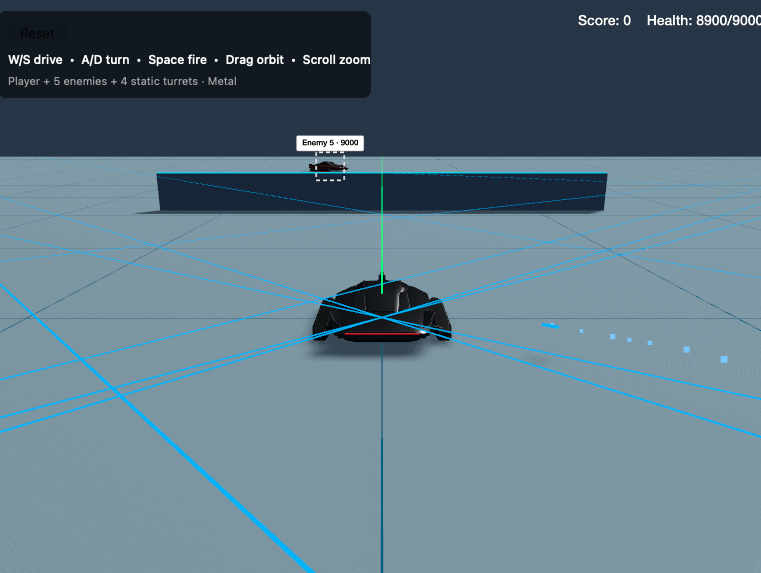
A long-running 3D OpenGL mech game and graphics programming project. Originally started around 1999, the project has evolved through multiple generations of C and C++ code and is now being revisited as a modern OpenGL learning and remastering project. It includes 3D rendering, camera movement, particles, game entities, and experiments with real-time networking. The current code also serves as a hands-on exploration of modern C++ and OpenGL development on macOS.
Review of Language Technology
- JRuby Home
- Groovy Home
- Clojure
- Scala is a general-purpose programming language designed to express common programming patterns in a concise, elegant, and type-safe way.
- Jython
- Armed Bear Common Lisp (ABCL) is an implementation of ANSI Common Lisp that runs in a Java virtual machine.
Additional Information
Thousand Brains Theory of Intelligence. The team is profit-driven and dedicated to this mission. They explore new ideas, solve complex challenges, and build the future of AI and robotics.
Numenta HTM.java - Unofficial open source htm.java version, Hierarchical Temporal Memory
Other Atlanta Organization and Sites
Umbra Desktop and Mobile Simulation System in progress. Will be a fully feature system avalable on SteamOS and Apple Store.
[root2]
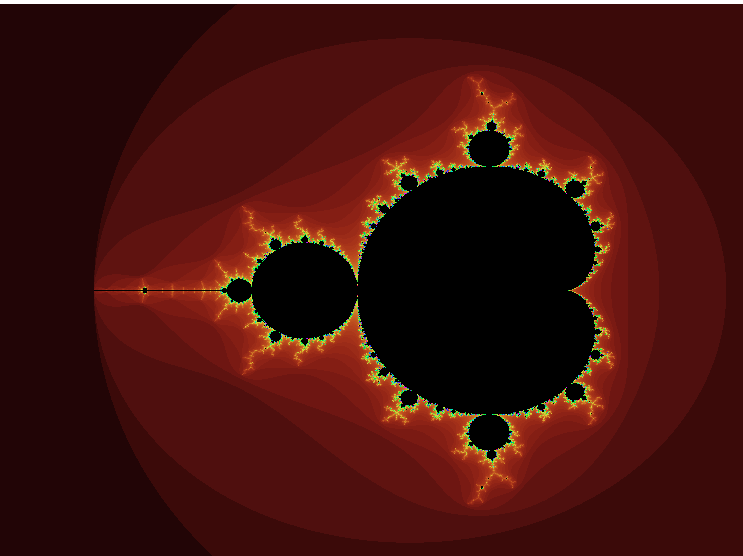
Images created with povray ray tracer.